Opportunity for those who have lost important photos and thought they would never get them back.
You need to know DiskDigger.
Advertisement
This app works like a true memory rescuer, recovering deleted images from your phone in just a few minutes, even those you thought were lost forever.

Before downloading any application to recover deleted photos, learn about the main benefits of DiskDigger and discover why it is one of the most recommended in the world.
Você permanecerá no mesmo site
Advantages and Disadvantages of DiskDigger: Is It Worth Using?
Before installing an app to recover deleted photos, it is essential to know its strengths and limitations.
THE DiskDigger is one of the most remembered names when we talk about image recovery, and this is no coincidence: it combines simplicity of use with high success rate, becoming a popular solution worldwide.
However, like any tool, it's not perfect. Performance varies depending on the device type, the time elapsed since deleting photos, and even the storage configuration used.
So let's analyze it in a way detailed the advantages and disadvantages so you know exactly what to expect and can confidently decide whether it is worth using in your case.
Advantages of DiskDigger
1. Fast and practical recovery
DiskDigger is designed to be accessible even to those without technical knowledge. With just a few taps, you can start a scan and, within minutes, view the files that can be restored.
This simple process is ideal for those who need to act quickly to avoid losing important photos.
2. Works across devices
Another big plus is compatibility. It's available for Android and Windows, which means it can be used on both mobile phones and computers.
This allows you to recover photos from camera memory cards, flash drives, external hard drives, and other storage devices.
3. Deep scan with root
On rooted Android devices, DiskDigger can explore areas of memory that are normally inaccessible, greatly increasing the chances of finding long-deleted photos.
This feature is especially useful in cases where the file does not appear in superficial searches.
4. Functional free version
Even without spending a dime, users can recover images in common formats like JPG and PNG. For those who only need to recover everyday photos, the free version is a great option.
5. Support for other files in the Pro version
For those who need to go beyond photos, the Pro version supports recovery of videos, documents, audio files, and even RAW images—a feature highly valued by photographers and media professionals.
6. Preview before recovery
The preview feature is a real lifesaver. Before restoring the file, you can check that it's actually what you want, avoiding wasting time on irrelevant images.
7. Cloud save option
Once you recover your photos, you can save them directly to services like Google Drive or Dropbox, ensuring they won't be lost again.
8. Simple and intuitive interface
Even with so many features, DiskDigger maintains a clean and straightforward interface. This makes it easy for anyone to use, even those with no prior experience with similar applications.
Disadvantages of DiskDigger
1. Limited results without root
Without root access, DiskDigger's scan is more superficial, which can reduce the number of files found. Very old photos or photos stored in specific memory sectors may not be found using this method.
2. Dependence on memory state
The effectiveness of recovery depends on one crucial factor: whether the deleted photo's space has already been overwritten by new data. If this has happened, the chances of restoring the file are virtually nil. Therefore, acting quickly is essential.
3. Variable quality of recovered photos
The recovered photo won't always be intact. In some cases, the resolution may be reduced or parts of the image may be corrupted. This happens when only fragments of the original file remain in memory.
4. Restricted free version
While functional, the free version doesn't allow you to recover videos, documents, or more advanced image formats. Those who require these features should consider purchasing the Pro version.
5. Limited compatibility with certain file systems
Devices that use less common file systems or have encrypted storage may present difficulties for DiskDigger, reducing the results obtained.
Conclusion
THE DiskDigger is an extremely useful tool for recovering deleted photos, especially when used quickly and consciously.
Your ease of use, compatibility with multiple devices and good success rate make it one of the most recommended options on the market.
On the other hand, it's important to have realistic expectations: it can't work miracles in every case. The time since the deletion, the type of device, and even the use of root directly influence the result.
If you want to see Step-by-step instructions for using DiskDigger and practical tips to increase your chances of success, I highly recommend reading the full article. Your memories deserve a second chance—and knowing how to use the right tool at the right time can make all the difference.
Yes, DiskDigger can recover photos that were deleted days, weeks, or even months ago—as long as the original data is still preserved in the device's memory. This is because when a photo is deleted, it doesn't disappear immediately: the space it occupied is marked as "free" to receive new data. If this space hasn't yet been overwritten, the chances of recovery are high. However, the more time passes and the more the phone is used after deletion, the greater the likelihood that the file will be overwritten by another and become unrecoverable. Want to learn techniques to increase your chances of success? Read the full article about DiskDigger.
Root access isn't required to use DiskDigger, but it can make all the difference in the final result. Without root, the application performs a superficial scan, which is enough to recover many recently deleted photos. However, with root, it gains access to deeper areas of the internal memory, significantly increasing the chances of locating old files or files that don't appear in a standard search. Therefore, if you're looking for more comprehensive results, it's worth considering using root—but always exercise caution and make a backup before making any changes. In this article, we explain step-by-step how root affects DiskDigger's effectiveness.
The free version of DiskDigger is excellent for users who need to recover common photos in the most popular formats, such as JPG and PNG. It performs well and, in many cases, completely resolves the problem. However, the Pro version offers additional features such as recovery of videos, documents, RAW images, and other file types, as well as advanced filtering options. If you're a photographer, work with media, or simply want the highest recovery rate possible, the paid version can be a great investment. Find out which DiskDigger version is best for you in this article.
Yes, DiskDigger is considered safe because it performs the entire recovery process locally on your device or computer, without sending your photos or files to external servers without your permission. This ensures that you remain in control of your data. Furthermore, it's always important to download the app from trusted sources, such as the Google Play Store or the official website, to avoid fake or modified versions that could compromise security. See this article for best practices for using DiskDigger safely.
Trending Topics

Rediscover Love
Transform your love life at 50! Discover the best apps and strategies for creating lasting and meaningful relationships.
Continue lendo
Inner Circle App: Love is within your reach!
Discover the secret to quality dating with the Inner Circle app. Connect with serious people and find true love!
Continue lendo
Take your eye exam online: use apps to test your vision
Discover a new era in eye health with the online eye exam. Take care of your vision in an innovative way using your cell phone.
Continue lendoYou may also like
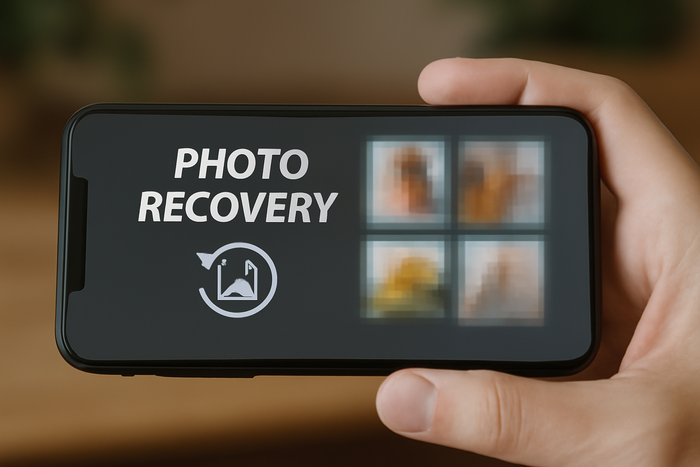
DiskDigger: The App That Recovers Deleted Photos and Revives Your Memories in Minutes
Accidentally deleted photos? DiskDigger is the app that finds and restores lost images directly on your phone. Learn how to use it!
Continue lendo
Badoo: Connecting Hearts in a Digital World
The evolution of dating apps is here! Discover Badoo and transform your online relationships into something extraordinary.
Continue lendo
Relationship Apps: Discover the best
Explore new ways to connect with the best dating apps. Find love, make friends and expand your social circle.
Continue lendo


